
 Image 1 of 5
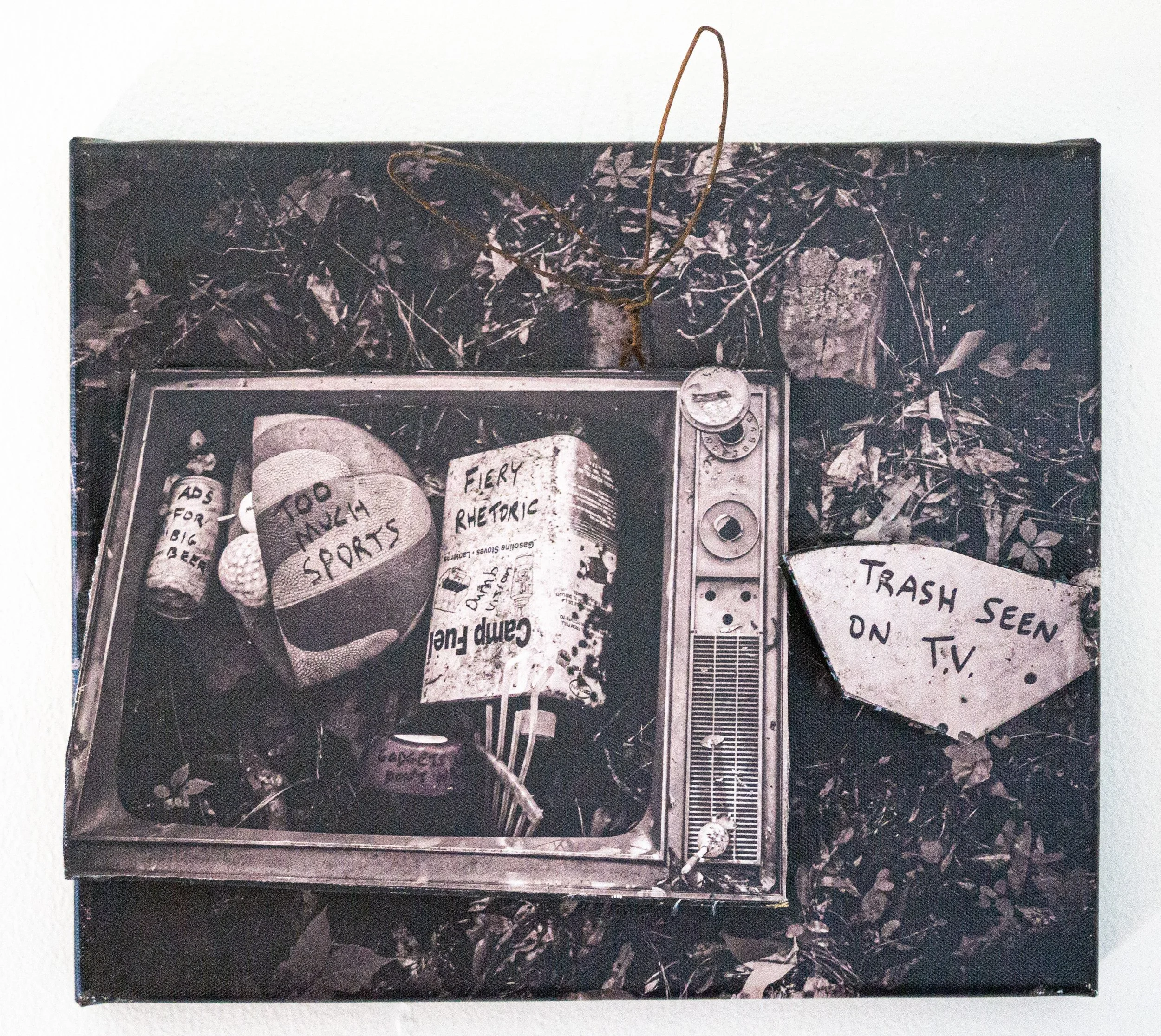 Image 2 of 5
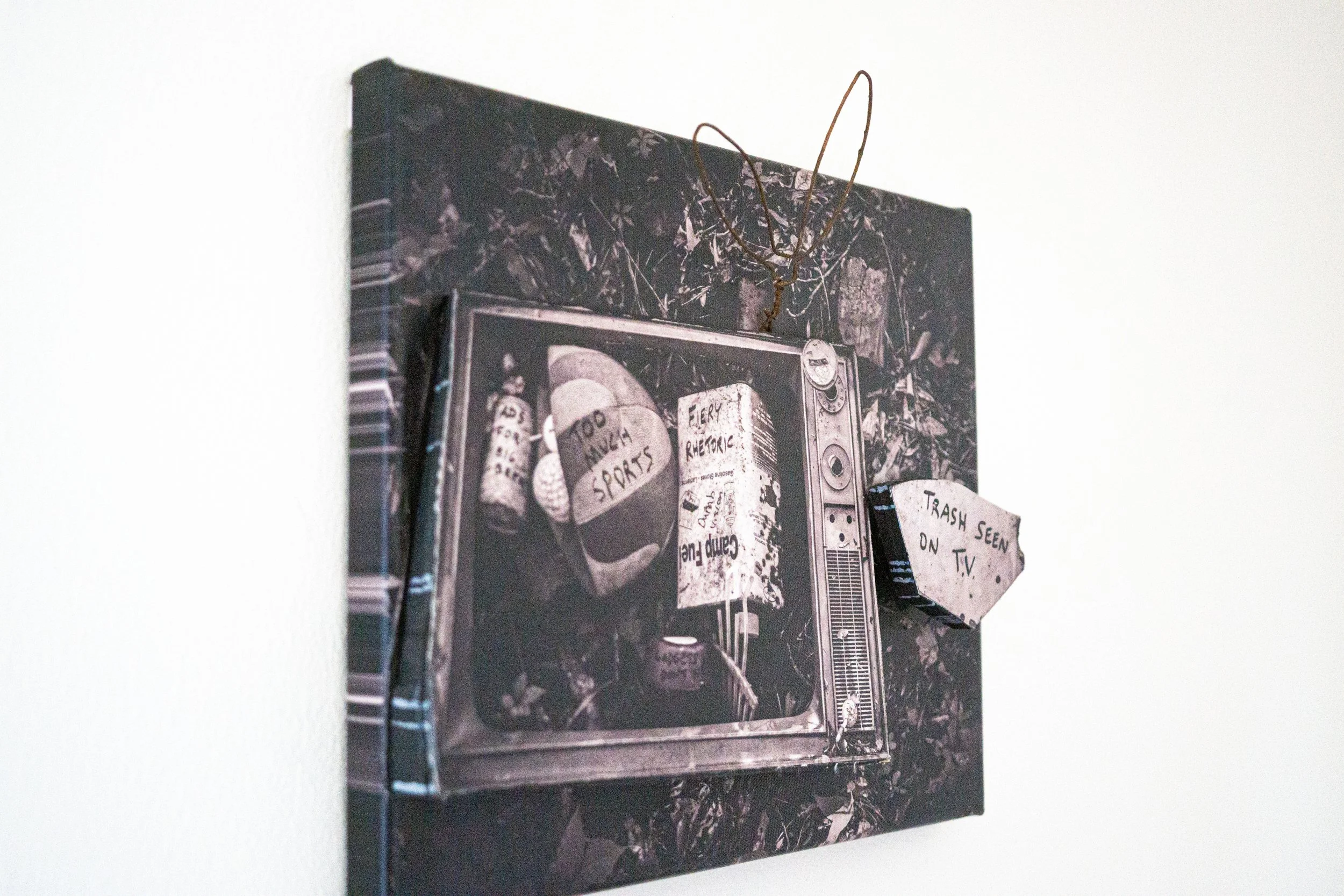 Image 3 of 5
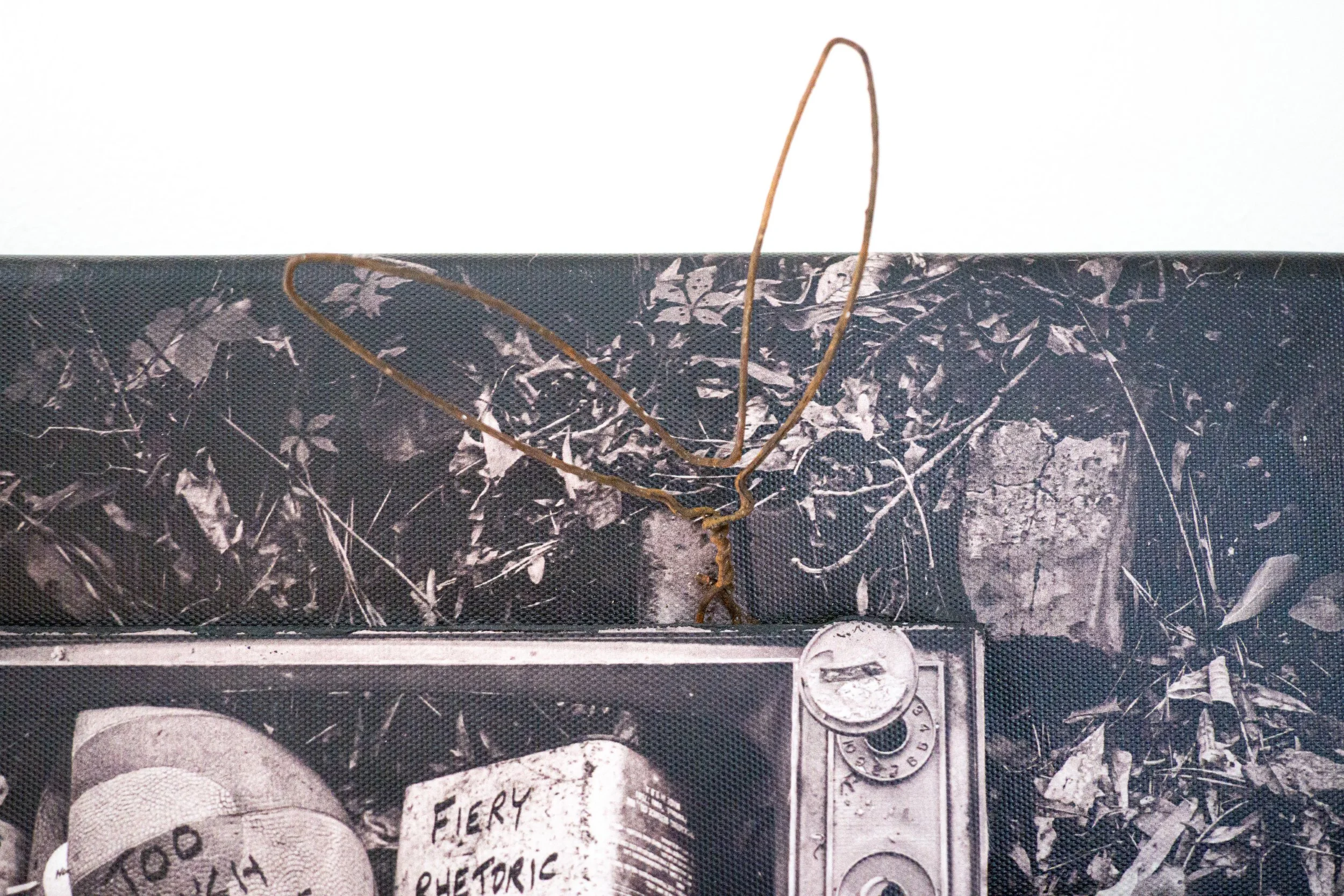 Image 4 of 5
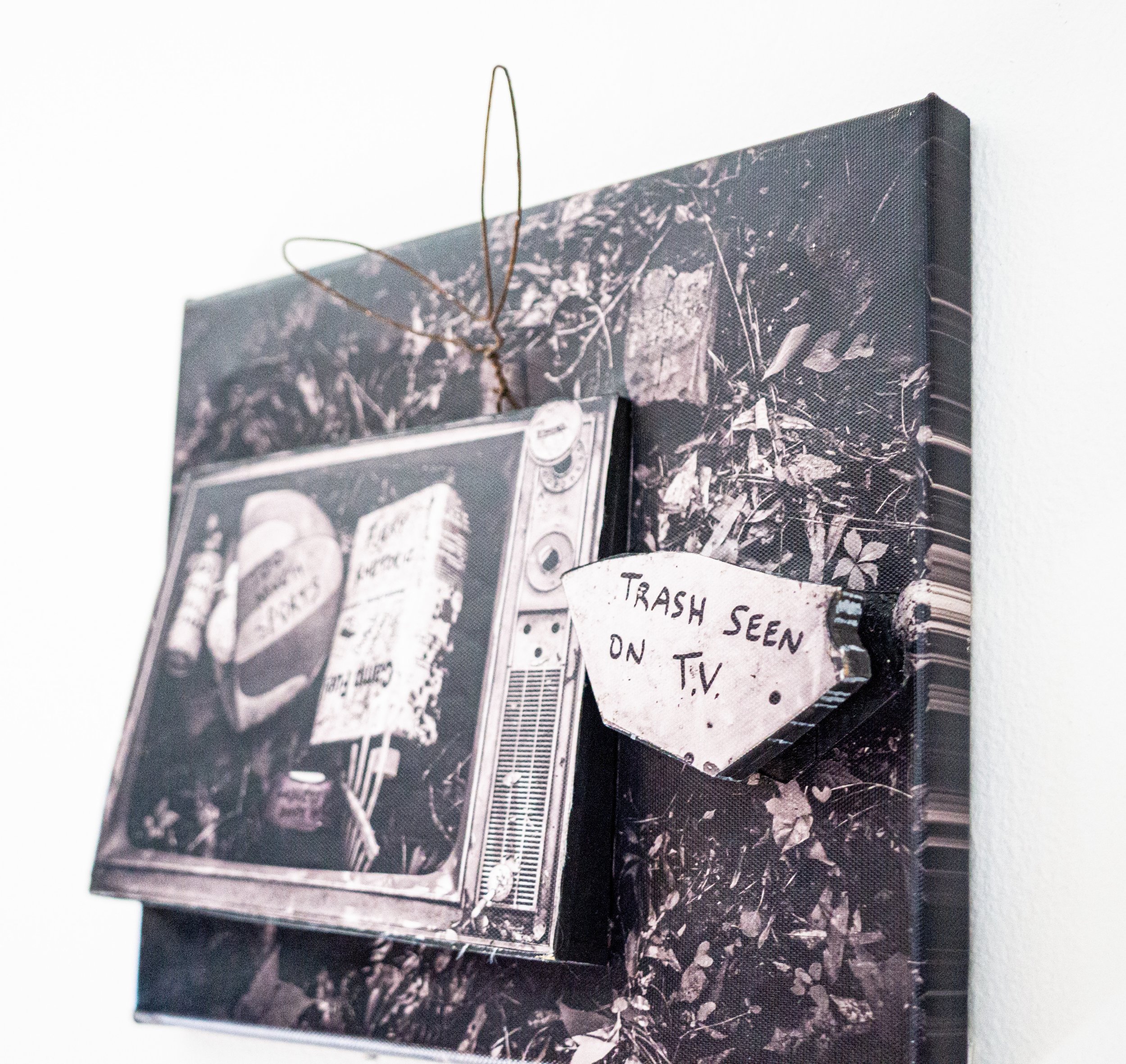 Image 5 of 5
Title: Trash on TV
Medium: Multi-dimensional mixed media (canvas print with dimensional elements)
Size: 10 × 12
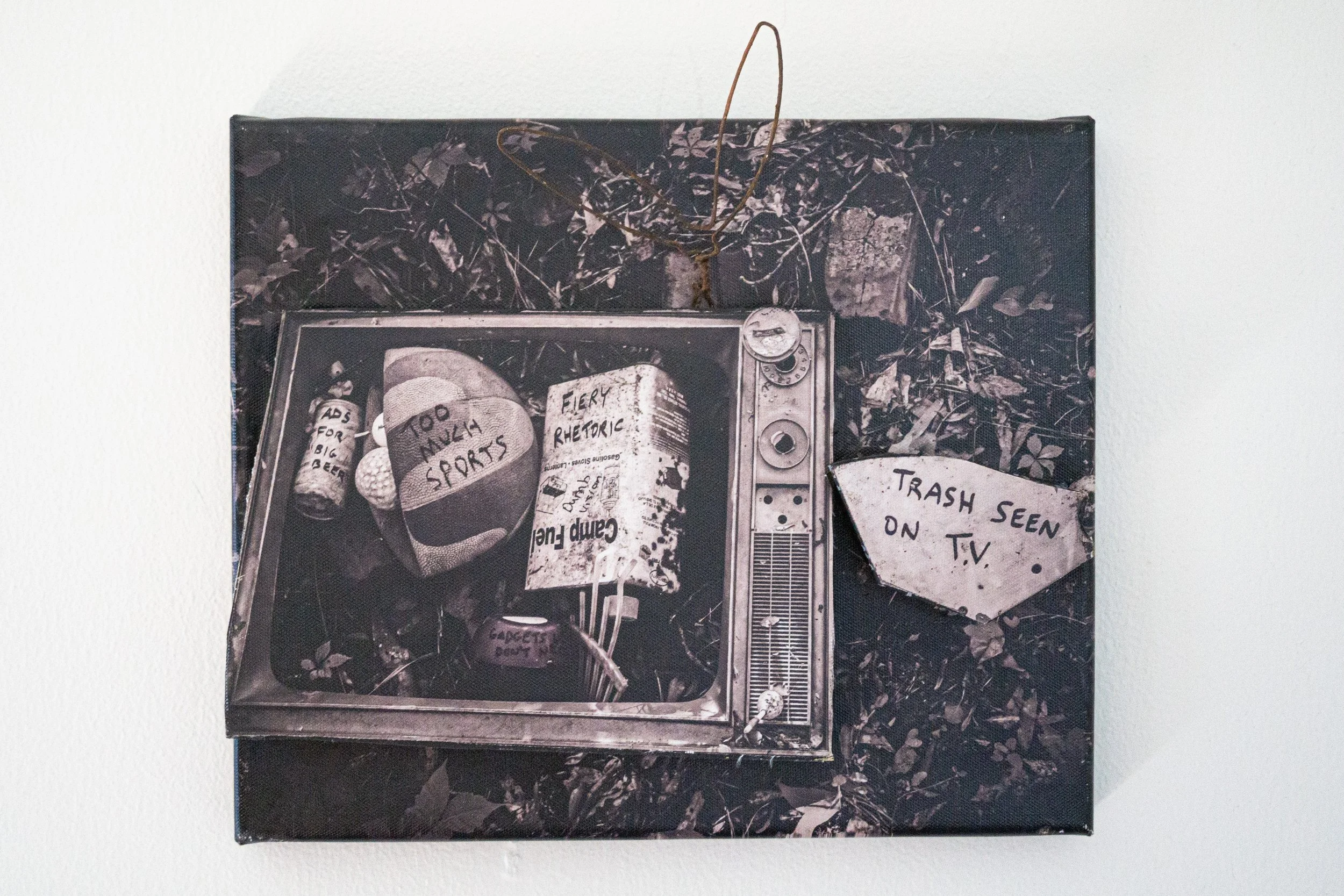
Trash on TV is a layered mixed media work built from an original photograph I captured at Doll’s Head Trail in Atlanta, Georgia—a place where discarded objects are reassembled into unexpected narratives. The image features an abandoned television set resting among debris, its screen filled with found objects scrawled with phrases like “Too Much Sports,” “Fiery Rhetoric,” and “Ads for Big Beer,” alongside a hand-lettered fragment reading “Trash Seen on T.V.”
Printed on canvas, the photograph is physically manipulated to create dimensional depth. Elements are lifted and constructed outward from the surface, transforming a flat image into a sculptural commentary. The added dimension mirrors the concept itself—how media can amplify noise, exaggerate spectacle, and elevate the disposable into something omnipresent.
By staging literal trash inside the frame of a television, the piece blurs the line between consumer waste and cultural waste. It asks the viewer to consider what we consume daily and what we allow to fill our mental landscapes.
At 10 × 12 inches, Trash on TV is compact but pointed—a quiet yet sharp reflection on media saturation, excess, and the detritus of modern attention.
Title: Trash on TV
Medium: Multi-dimensional mixed media (canvas print with dimensional elements)
Size: 10 × 12
Trash on TV is a layered mixed media work built from an original photograph I captured at Doll’s Head Trail in Atlanta, Georgia—a place where discarded objects are reassembled into unexpected narratives. The image features an abandoned television set resting among debris, its screen filled with found objects scrawled with phrases like “Too Much Sports,” “Fiery Rhetoric,” and “Ads for Big Beer,” alongside a hand-lettered fragment reading “Trash Seen on T.V.”
Printed on canvas, the photograph is physically manipulated to create dimensional depth. Elements are lifted and constructed outward from the surface, transforming a flat image into a sculptural commentary. The added dimension mirrors the concept itself—how media can amplify noise, exaggerate spectacle, and elevate the disposable into something omnipresent.
By staging literal trash inside the frame of a television, the piece blurs the line between consumer waste and cultural waste. It asks the viewer to consider what we consume daily and what we allow to fill our mental landscapes.
At 10 × 12 inches, Trash on TV is compact but pointed—a quiet yet sharp reflection on media saturation, excess, and the detritus of modern attention.